


Ercol Dining Table Buying Guide
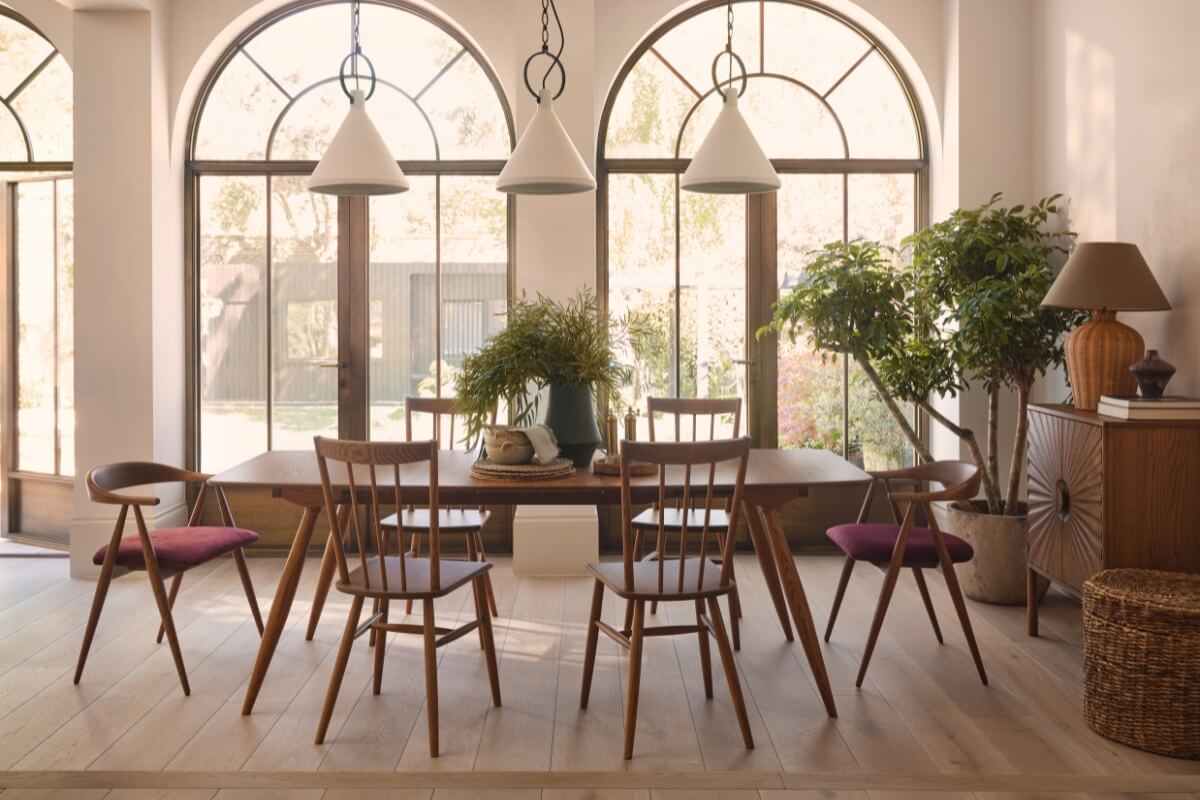
A dining table has to earn its place in daily life, not just look good the day it arrives. Ercol has been building tables on that principle since Lucian Ercolani founded the company in High Wycombe in 1920, and the range today still comes down to three fundamentally different approaches: extending tables that flex with how often you entertain, drop leaf tables that give a compact room some breathing room, and refectory tables built as a fixed, permanent centrepiece.
Each style solves a different problem, and the right one for your home depends less on taste than on how your dining room actually gets used week to week. We've helped South Yorkshire families choose Ercol dining tables from our three-storey Doncaster showroom for over 105 years, and this guide walks through how each style works, how to size one correctly, and what to look for in timber and finish.
Table of Contents [Hide]
- Ercol Dining Table Styles Explained
- Choosing the Right Table Size for Your Dining Space
- Comparing Extending Mechanisms Across Ercol Ranges
- Matching Seating Capacity to Your Dining Room
- Timber Options and Finishes
- Caring for Your Ercol Dining Table
- Visiting Ward Brothers to See Ercol Dining Tables in Person
- Conclusion
- FAQs
Ercol Dining Table Styles Explained
Extending Tables
Extending tables solve the problem of entertaining without dedicating permanent floor space to a table built for eight. Ercol's extending ranges — including Teramo, Romana, Fairmile, Bosco and Siena — use a variety of mechanisms, from a single hinged leaf that folds into the frame to twin leaves that pull out from either end, depending on the range and size.
The practical differences matter before you choose. A single hinged leaf is usually the simplest to operate day to day, while a twin-leaf mechanism can add significant length for bigger gatherings but takes a little more room to manoeuvre. If you're not sure which suits you, try the mechanism yourself a few times in the showroom before you commit, since the action varies noticeably between ranges.
Drop Leaf Tables
Drop leaf tables fold down on one or both sides, shrinking the table's footprint for everyday use and opening back out when you need the extra surface. They suit compact dining spaces particularly well, since the closed size can be considerably narrower than the table's extended width.
Because the leaves fold rather than store separately, there's nothing extra to find room for elsewhere in the house — the whole mechanism lives within the table itself. This makes drop leaf tables a practical fit for kitchen-diners and smaller rooms where a fixed-size table would eat into everyday floor space.
Refectory Tables
Refectory tables are the most traditional option: a solid, fixed-top table with no folding or extending mechanism at all. What you lose in flexibility, you gain in permanence and presence — refectory tables tend to anchor a room in a way that an extending table, designed to change shape, doesn't.
They suit larger dining rooms and households that entertain regularly enough to want a generous table as a fixture rather than something assembled for the occasion. Because the design doesn't chase trends, a well-made refectory table tends to stay relevant for decades rather than dating alongside changing furniture fashion.
Choosing the Right Table Size for Your Dining Space
Start with an accurate measurement of your dining room before you fall in love with a particular table. It's easy to focus on the tabletop dimensions and forget the space chairs need to pull out comfortably — as a rule of thumb, allow at least 90cm of clearance behind every seated chair for someone to get up and walk past without squeezing.
Think about traffic flow too, not just mealtime seating. Door swings, sideboards, and the everyday path from kitchen to table all compete for the same floor space, so walk the room with those in mind rather than measuring the table alone.
If you're choosing between styles, our general guidance is straightforward: a compact or irregularly shaped room usually suits a drop leaf table that can shrink when it's not needed, a room that hosts occasionally but not constantly suits an extending table, and a larger, dedicated dining room can comfortably carry a refectory table as a permanent feature.
Comparing Extending Mechanisms Across Ercol Ranges
Ercol's extending ranges don't all use the same mechanism, and the differences affect both how much extra length you gain and how easy the table is to operate day to day.
| Mechanism | How It Works | Best Suited To |
|---|---|---|
| Single hinged leaf | One extra leaf folds out from within the table and locks into place | Households that extend occasionally and want the simplest action |
| Twin leaf | Two leaves store within the frame and pull out independently | Larger gatherings, where more additional length is useful |
| Pull-apart with inserted leaf | The table separates and a loose leaf is inserted between the two halves | Buyers who don't mind storing a leaf separately in exchange for a longer maximum length |
Range names to look for in each category include Teramo, Romana, Fairmile, Bosco and Siena — each has its own take on extending mechanism and proportions, so compare more than one in the showroom rather than choosing on looks alone.
Matching Seating Capacity to Your Dining Room
As a general guide, a compact rectangular table comfortably seats four, extending ranges typically stretch to seat six to eight once opened out, and a larger refectory table can seat eight to ten depending on its length. Round tables suit smaller households well — they encourage conversation and use space efficiently, but seating tends to top out around four to six before the table becomes impractical.
Whichever shape you choose, allow roughly 60cm of table width per diner so elbows aren't competing for space, and remember that a table's practical capacity is usually a little lower than its maximum quoted seating once chairs, place settings and serving space are all accounted for.
Timber Options and Finishes
Ercol dining tables have historically drawn on solid British timbers including elm, beech, ash and oak, each with its own character. Ash and oak dominate the current collection: ash has a pale, straight grain and takes stain and paint finishes well, while oak is denser, with a more pronounced grain that deepens in colour with age. Where older or reissued ranges use elm, its interlocking grain gives a warmer, more irregular figure that's part of the appeal for anyone drawn to Ercol's mid-century look.
Every table gets a clear lacquer finish that protects the timber from moisture and everyday wear while letting the natural grain show through. Because timber is a natural material, some variation in tone and grain between individual pieces is normal — view finish samples in person under your own lighting before deciding, since daylight and artificial light both change how a wood tone reads.
Caring for Your Ercol Dining Table
A well-made dining table is a long-term piece of furniture, and it repays a small amount of regular care.
Dust weekly with a soft, dry cloth to stop particles scratching the surface over time, and wipe up spills promptly with a slightly damp cloth before drying thoroughly. Coasters and placemats prevent moisture rings and heat marks, and keeping the table away from radiators and direct sunlight protects the finish and colour over time.
Beyond everyday care, an occasional polish with pure beeswax keeps the timber's natural lustre intact, and if your table has an extending mechanism, check it periodically and apply a little furniture oil to the moving parts as needed. Extension leaves are best stored somewhere cool and dry when not in use, so they don't warp out of true with the rest of the table.
Visiting Ward Brothers to See Ercol Dining Tables in Person
Photographs only tell you so much about scale, finish and how a mechanism actually feels to operate. Our Doncaster showroom displays Ercol dining tables across more than 100 room settings on three floors, so you can sit at a table, test the extending action for yourself, and compare ranges side by side before deciding.
As an official Ercol stockist, we carry current collections including Teramo, Romana, Fairmile, Bosco and Siena, and our sales team works on a non-commissioned basis — the advice you get is based on what suits your dining room, not on what earns the best commission. We're a family-run business, trading in Doncaster since 1919 and now led by Tom Fiddler, our fifth-generation Managing Director.
Conclusion
Choosing an Ercol dining table comes down to how you actually use your dining room, not just how a table looks in a photograph. Extending tables give you flexibility for occasional larger gatherings, drop leaf tables suit compact spaces that need to work hard for their footprint, and refectory tables bring permanence and presence to a larger room.
Measure your space, think honestly about how often you'll extend it, and let the timber and mechanism do the rest of the deciding. Visit our Doncaster showroom or browse our Ercol dining collection at wardbrothers.co.uk, and our team will be glad to talk you through which range fits your space.
FAQs
What's the difference between an Ercol extending and drop leaf dining table? An extending table starts at a fixed size and grows with an additional leaf or leaves stored within the frame. A drop leaf table works the other way round — it starts at its largest size and folds down for everyday use, which tends to suit smaller rooms better.
How many people does an Ercol dining table seat? It depends on the range and size, but as a rough guide, compact tables typically seat four, extending ranges stretch to six or eight once opened out, and larger refectory tables can seat up to ten.
What timber are Ercol dining tables made from? Current ranges are predominantly ash and oak, with some ranges featuring elm, reflecting Ercol's historical use of that timber. All are finished with a clear lacquer that protects the wood while showing off its natural grain.
Do Ercol tables need special care? Nothing complicated — regular dusting, prompt spill removal, coasters and placemats, and an occasional beeswax polish will keep a table looking right for decades. Extending mechanisms benefit from an occasional check and a little furniture oil on the moving parts.
-
Posted in
Buying Guide, Dining Chairs, Dining Furniture, Dining Room, Dining Tables, Ercol